Mirror life could change the rules of existence on Earth: why scientists are demanding a halt to dangerous research
Scientists warn of a potentially unprecedented biological risk. This concerns the creation of so-called "mirror life" — microorganisms built from molecules of opposite chirality. No such self-replicating organisms exist yet, but experts believe that the development of synthetic biology is gradually bringing humanity closer to a technological boundary that may be dangerous to cross.
The topic has once again found itself in the spotlight following publications and expert assessments devoted to the risks of mirror life. The Economist also called on regulators to act before the technology becomes practically feasible.
This is where things get most interesting: the potential danger is not connected to yet another virus or bacterium, but to the creation of a form of life that is fundamentally different from all the biology we know.
What "mirror life" is
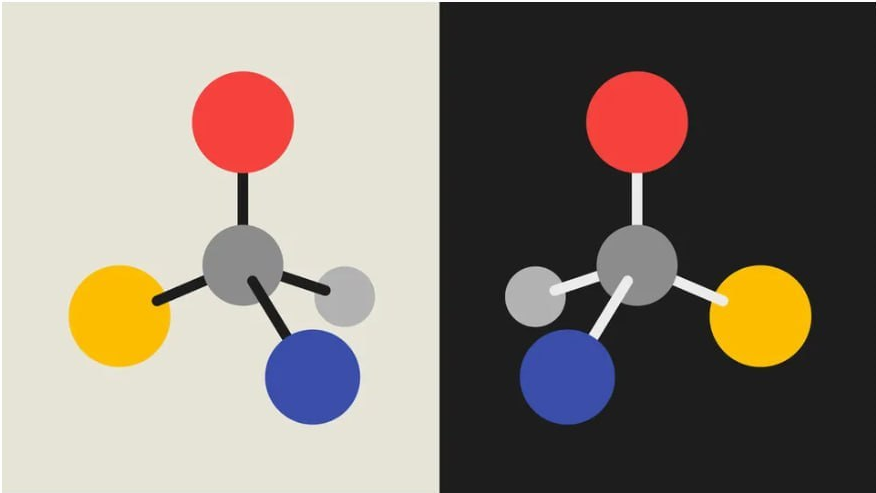
To understand the scale of the problem, it is necessary to grasp the concept of chirality.
Many biological molecules have two forms that are mirror images of each other. They can be compared to a right and a left hand: they are similar, but one cannot be perfectly superimposed on the other.
Natural life on Earth predominantly uses only one of these forms. For example, the proteins of living organisms are built mainly from left-handed amino acids, while genetic material uses a specific configuration of nucleotides.
Scientists have learned to synthesize individual molecules of the opposite configuration. Such substances are called mirror molecules.
But the next step is far more difficult.
Theoretically, one could attempt to create a cell in which not just individual molecules, but virtually the entire biochemical system would be "flipped" relative to familiar life.
This is how the concept of the mirror organism — mirror organism or mirror life — emerges.
It is precisely this prospect that raises the greatest concerns.
Why ordinary biology may turn out to be opposed to such life
Billions of years of evolution have formed an extraordinarily complex system of interactions between organisms.
The immune system recognizes foreign molecules. Enzymes break down specific substances. Bacteria compete with one another. Viruses infect cells. Bacteriophages attack bacteria.
All of this works thanks to precise molecular interaction.
But if a molecule has a mirror structure, the familiar biological mechanism may work considerably worse.
This is precisely why specialists are considering the potential possibility that a mirror microorganism may prove less susceptible to certain natural control mechanisms.
In its scientific review, the UN emphasizes the fundamental difference between individual mirror molecules and self-replicating mirror life. For the former, the potential risks are assessed as significantly lower, whereas the emergence of an organism capable of reproduction could create an entirely different scale of threat.
The most dangerous word here is "self-replicating"
It is precisely the ability to reproduce that turns a hypothetical technology from a laboratory experiment into a potential ecological problem.
A single synthetic molecule is incapable of independently spreading and creating new copies of itself.
A living cell is capable of it.
If a viable mirror microorganism possessing the ability to independently reproduce is ever created, a fundamentally different scenario arises.
It could theoretically gain the ability to:
- reproduce in the environment;
- interact with organisms that have never before encountered such biology;
- evade some natural mechanisms of biological control;
- spread beyond the laboratory;
- create unpredictable ecological consequences.
At the same time, it is important to emphasize: these are risk scenarios, not a description of an already existing threat.
Today, there is no freely spreading man-made mirror bacterium.
"Immunity will be absolutely useless" — too strong a claim
This is precisely where many sensational headlines arise around the topic.
It cannot be correctly asserted that a mirror organism would guaranteed make the human immune system completely useless.
Scientists are saying something different: a change in molecular architecture could potentially significantly affect the body's recognition of and interaction with such a form of life.
Moreover, how serious this effect would be cannot be definitively verified without creating a full-fledged mirror organism — and it is precisely such an experiment that specialists propose not to conduct.
In an analysis published in Science, a group of researchers concluded that the potential risks of creating mirror organisms are so serious that work aimed directly at creating mirror bacteria should not be permitted until convincing evidence of their safety emerges.
Why scientists propose stopping right now
At first glance it may seem strange: if the technology has not yet been created, why introduce restrictions?
The answer lies in the principle of precaution against catastrophic risk.
Some scientific technologies at first seem a distant prospect, and then development accelerates.
This is precisely why specialists propose defining in advance the boundary between safe research and experiments that could lead to the creation of self-replicating mirror life.
In 2025, the British Government Office for Science separately emphasized the need to distinguish between research on individual mirror components and the development of mirror organisms or cells capable of self-replication.
This is a fundamentally important distinction.
Mirror molecules could prove very useful
The paradox of the situation lies in the fact that mirror chemistry itself is not something exclusively dangerous.
On the contrary, it could have serious medical and technological significance.
Mirror molecules may be more resistant to the body's enzymes, which quickly break down ordinary biological compounds. This creates potential opportunities for developing medications, diagnostic systems, and new materials.
The UN notes possible applications of mirror molecules in medicine, diagnostics, and materials science.
Therefore, this is not about banning all science of mirror molecules.
The main question is far narrower:
should a fully mirror organism capable of independently reproducing be created?
Scientists are already calling this scenario potentially catastrophic
In 2024, an international group of specialists published a risk analysis in the journal Science. The authors emphasized that the potential problem lies not only in the impact on humans.
A mirror microorganism could theoretically interact with plants, animals, and other microorganisms in a completely different way than ordinary bacteria.
This means that the consequences of such an organism possibly escaping the laboratory cannot be reliably predicted in advance.
This is precisely why the authors called on the scientific community not to move toward creating mirror bacteria.
How close is humanity to creating mirror life?
Here it is necessary to separate reality from fiction.
A mirror bacterium capable of independently living and reproducing has not yet been created.
However, the fundamental components of mirror biology are already being researched and synthesized. According to the assessment of the UN Secretary-General's Scientific Advisory Board, the creation of full-fledged self-replicating mirror life is probably at least a decade away, although the exact timing cannot be predicted.
It is precisely the gradual approach toward this technological possibility that is prompting specialists to discuss rules in advance.
Why a ban is being discussed before the technology itself appears
There is a fundamental difference between the questions:
"Can this be done?" and "Should this be done?"
Modern synthetic biology increasingly confronts precisely this problem.
If a potentially dangerous organism does not yet exist, humanity has the opportunity to establish rules before it appears.
But if such an organism is one day created and escapes beyond the controlled laboratory environment, it may be impossible to turn the situation back.
This is precisely where the experts' main anxiety lies.
This is not a "new virus," but a potentially new branch of biology
The name "mirror life" sounds almost like science fiction.
But behind it stands a quite real field of science — synthetic biology, molecular biology, and the study of chirality.
The main peculiarity of the concept lies in the fact that this is not about changing a single gene or creating yet another variant of an existing microorganism.
Hypothetically, it could be about creating an organism whose fundamental molecular architecture differs from that used by all the life we know.
This is precisely why some researchers consider the potential consequences so serious.
The world finds itself before an unusual scientific choice
On the one hand — the enormous potential of mirror chemistry for medicine, pharmaceuticals, and biotechnologies.
On the other — the unknown regarding what will happen after the creation of a self-replicating mirror cell.
And here a question arises that already goes far beyond the laboratory:
should humanity create a new form of life simply because it is technically capable of doing so?
At present, more and more specialists are leaning toward the precautionary principle: research useful mirror molecules, but treat with extreme caution the development of organisms capable of independently reproducing. Contemporary scientific publications of 2025–2026 show that the discussion around this issue continues.
The main point
Mirror life does not yet exist.
But the scientific knowledge necessary for its potential creation is gradually developing.
This is precisely why today's discussion is not about a fantastical creature that will emerge from the laboratory tomorrow.
It is about something else:
what boundary biotechnologies should establish before humanity gains the ability to cross it.
And perhaps this is precisely what makes the mirror life story one of the most unusual scientific discussions of recent years.